


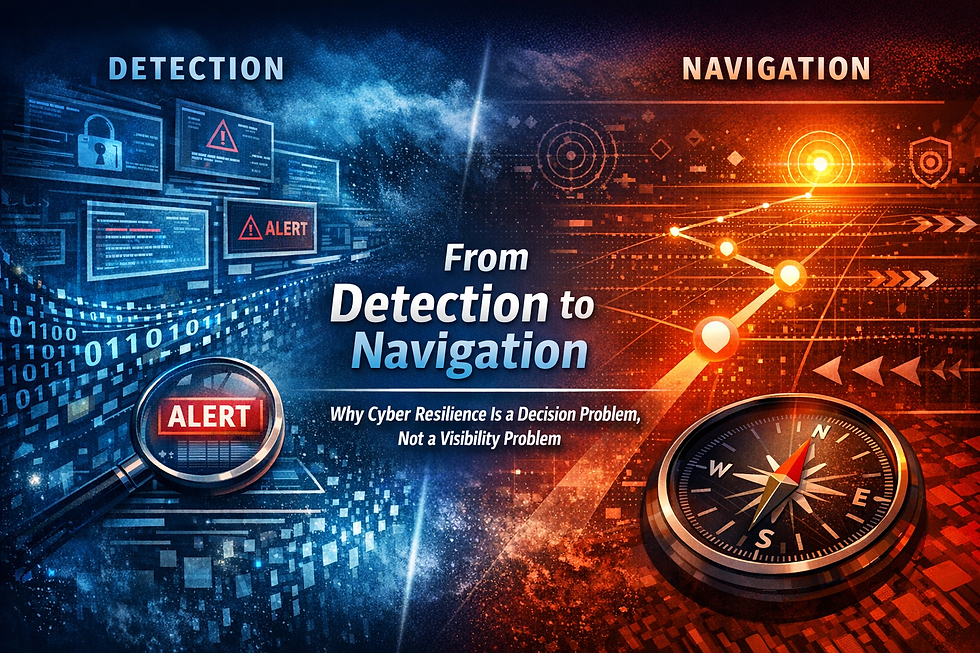
Why Your business needs a cyber resilience partner who manages not just technology, but your ability to anticipate, withstand, and recover from attacks.

In today’s digital economy, businesses don’t just face hackers or random malware. They face constant, evolving pressure on their ability to operate, recover, and earn trust. Cyberattacks, compliance failures, and data breaches aren’t just IT headaches—they’re business continuity risks.
The challenge for many organizations is that security is fragmented: point solutions everywhere, compliance managed in spreadsheets, IT firefighting instead of forward planning. Internal teams, often under-resourced, simply cannot keep pace with the speed and sophistication of modern threats.
This is why the conversation has shifted. It’s no longer enough to “outsource security.” What businesses need today is a cyber resilience partner—an organization that integrates security management with risk governance, regulatory compliance, and operational recovery, all while enabling growth.
Why Cyber Resilience is the New Managed Security
Outsourced security management used to be about offloading complexity: hire a Managed Security Services Provider (MSSP) to monitor threats, manage incidents, and keep the lights on. But cyber resilience goes further.
A cyber resilience partner still provides the advanced detection, incident response, and compliance expertise of an MSSP—but reframes the value:
From tools to outcomes: It’s not just about deploying SIEM, EDR, or firewalls. It’s about guaranteeing faster response, reduced risk exposure, and measurable compliance.
From defense to continuity: Protection matters, but so does recovery. Cyber resilience ensures businesses can withstand and bounce back from disruptions without catastrophic downtime.
From security silos to governance integration: A true partner aligns cybersecurity with broader business goals—risk management, industry regulation, customer trust.

Outsourced security management provides continuous monitoring and protection.
What Cyber Resilience Looks Like in Practice
A cyber resilience partner delivers much more than outsourced security monitoring. At Securicom, this includes:
Continuous Threat Management:
Proactive detection and response, powered by AI-driven analytics and 24/7 operations, to identify and neutralize threats before they disrupt business.
Attack Surface & Vulnerability Management:
Beyond patching, this means continuously mapping your exposures, understanding business impact, and prioritizing fixes that matter most.
Compliance & Governance:
Support for ISO 27001, SOC 2, GDPR, HIPAA, and more—ensuring your organization doesn’t just “tick the box” but demonstrates resilience to regulators and clients.
Resilient Operations & Recovery:
Backup, recovery, and cyber warranty services that ensure you can continue operations even after an incident.
Strategic Advisory (vCISO & Risk Services):
Guidance that translates cybersecurity into business language—tying risk to ROI, customer trust, and long-term growth.

Cybersecurity analysts use advanced tools to monitor and protect business networks.
Key Benefits of Partnering for Resilience
24/7 Assurance – Attacks don’t sleep. Resilience means you don’t have to worry about who’s watching when your team is offline.
Advanced Technology, Without the Overhead – AI-powered SIEM, continuous testing, and advanced analytics delivered as a service.
Scalability That Matches Growth – As your business expands, your protection scales seamlessly.
Predictable Costs, Measurable Value – Shift from unpredictable capital expenses to an operational model tied to business outcomes.
Integrated Risk & Compliance – Reduce the burden of proving compliance and embed governance into everyday operations.

How to Choose the Right Partner
When evaluating providers, look beyond “MSSP checklists.” The right partner should:
Demonstrate alignment with your industry risks and regulatory pressures.
Offer transparent reporting tied to resilience outcomes, not just log files.
Provide flexibility to adapt services as your business model evolves.
Integrate AI-driven security and governance capabilities to stay ahead of threats.
Commit to shared accountability—including warranties, SLAs, and clear remediation timelines.
From Security to Resilience
Outsourced security management was step one. The real competitive advantage comes from embedding resilience—where security, compliance, and recovery converge.
Businesses that achieve this shift not only withstand today’s cyber threats but earn trust, unlock growth, and operate with confidence in tomorrow’s unpredictable landscape.
Partnering with a cyber resilience provider like Securicom transforms the narrative: it’s no longer about outsourcing problems, but about securing outcomes.


Comments